
Globalizing Indian Knowledge & Indianizing Global Knowledge Essential for Viksit Bharat: CM Devendra Fadnavis
HOME / BLOG
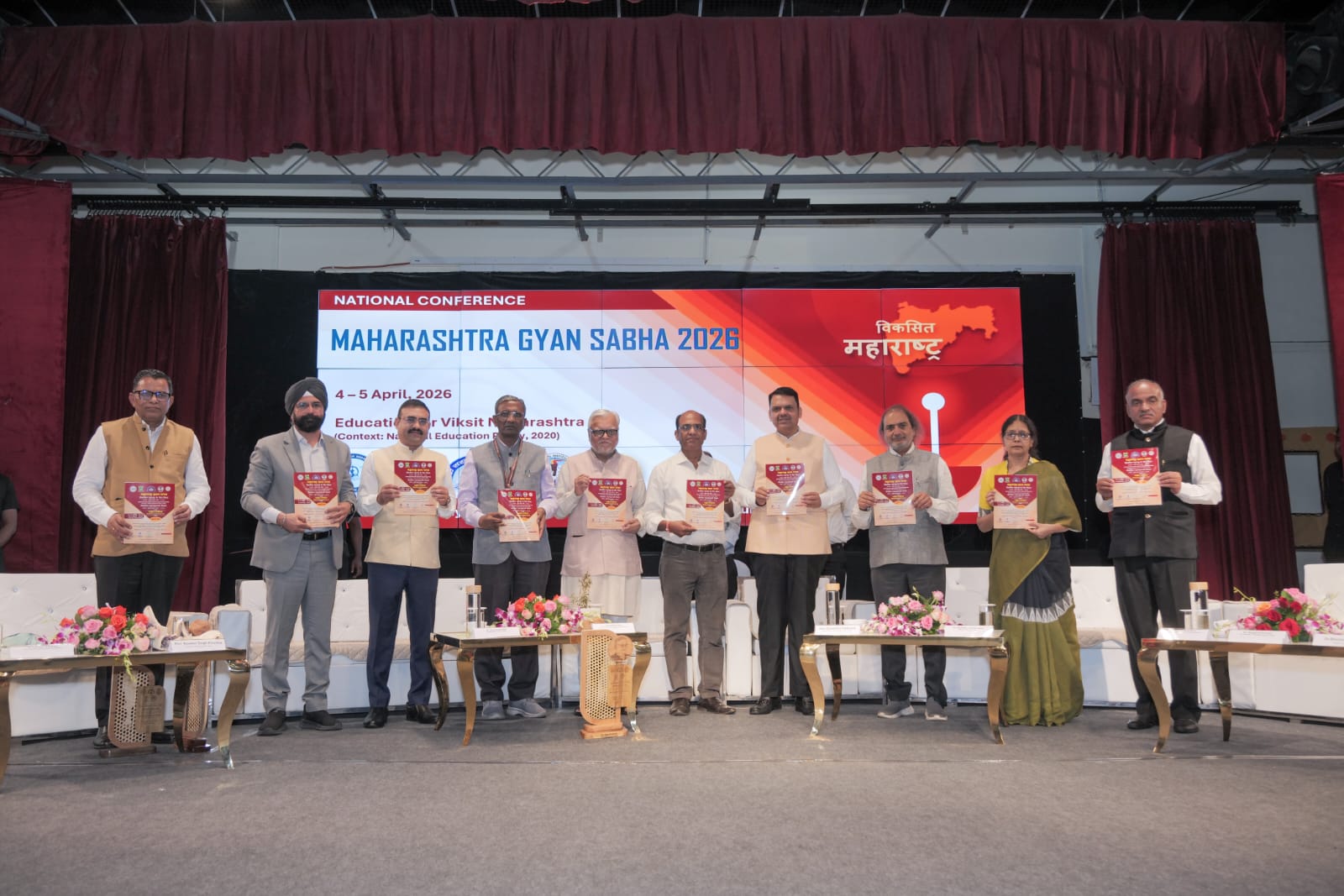
Globalizing Indian Knowledge & Indianizing Global Knowledge Essential for Viksit Bharat: CM Devendra Fadnavis
Nagpur | April 04 2026
“Globalizing Indian knowledge and Indianizing global knowledge is essential to achieve the vision of Viksit Bharat 2047,” said Devendra Fadnavis, Chief Minister of Maharashtra, while addressing the inaugural session of the Maharashtra Gyan Sabha on the theme “Education for a Developed Maharashtra.”
The session was presided over by Mr. Atul Kothari, National Secretary of Shiksha Sanskriti Utthan Nyas. Dignitaries present on the occasion included Dr. Prashant Narnaware, Secretary to the Hon’ble Governor of Maharashtra; Dr. Madabhushi Madan Gopal, Chairman of the Board of Governors, Visvesvaraya National Institute of Technology; Dr. Manali Kshirsagar, Vice-Chancellor of Rashtrasant Tukadoji Maharaj Nagpur University; Dr. Prashant Bokare, Vice-Chancellor of Gondwana University; Dr. Bhimaraya Metri, Director of Indian Institute of Management Nagpur; Dr. Prem Lal Patel, Director of VNIT; and Dr. Ravleensingh Khurana, President of Laghu Udyog Bharati.
The Maharashtra Gyan Sabha was आयोजित at the auditorium of VNIT Nagpur and jointly organized by RTM Nagpur University, Gondwana University Gadchiroli, VNIT Nagpur, IIM Nagpur, and Shiksha Sanskriti Utthan Nyas, New Delhi.
Blending Ancient Wisdom with Modern Knowledge
In his keynote address, Devendra Fadnavis emphasized the importance of integrating India’s rich ancient knowledge traditions with modern global advancements. He highlighted that India had world-renowned universities such as Nalanda, Takshashila, Vikramshila, and Kashi even before the concept of universities emerged globally. These institutions offered advanced education in astronomy, medicine, science, grammar, and architecture, reflecting India’s deep-rooted intellectual legacy.
He noted that merely glorifying history is not enough; instead, India must leverage its past while adapting to present realities to shape the future.
Adapting to Rapid Global Transformations
Referring to the pace of global development, he explained that while earlier industrial revolutions took decades or centuries, the fourth, fifth, and emerging sixth industrial revolutions have unfolded within a span of just 15 years. He stressed that technologies like Artificial Intelligence (AI) are playing a crucial role in driving these transformations.
He further highlighted the significant contributions of people of Indian origin in these global advancements and emphasized the need to align education policies and human resource development with future challenges.
Education for Holistic Development
The Chief Minister stressed that education must foster intellectual, emotional, moral, and professional capabilities. A well-rounded education system, he said, is key to building a strong and capable generation that contributes to national development.
He also underlined the importance of implementing the National Education Policy (NEP 2020) effectively by integrating Indian knowledge systems into modern education frameworks.
Calling upon educators, he urged them to revise outdated curricula and design courses aligned with current and sustainable development needs, while continuously upgrading their own skills.
Universities Must Prepare Action Plans
Dr. Prashant Narnaware, Secretary to the Governor of Maharashtra, stated that achieving the vision of a $1 trillion economy for Maharashtra requires concrete action plans from universities. He highlighted recent global collaborations from Davos and informed that the government has allocated 300 acres of land in Mumbai for establishing foreign universities.
Indian Knowledge Tradition as a Driver of Change
Atul Kothari emphasized that India’s knowledge tradition can become a powerful driver of transformation. He noted that the NEP 2020 envisions significant reforms in the education system and stressed the importance of research-driven development.
He further highlighted the need to increase participation from all sections of society and integrate Indian knowledge systems from the primary education level itself, thereby increasing the responsibility of higher education institutions.
He also mentioned that Maharashtra is hosting the sixth Gyan Sabha, following similar events in Madhya Pradesh, Chhattisgarh, Rajasthan, and Gujarat.
Program Highlights
The welcome address was delivered by Dr. Prem Lal Patel, Director of VNIT, who emphasized the role of knowledge as a source of power. The vote of thanks was proposed by Dr. Manali Kshirsagar, Vice-Chancellor of RTM Nagpur University.
The session was anchored by Dr. Kalyani Kale and Dr. Chinmayee Nimkhedkar. The event witnessed enthusiastic participation from academicians, officials, department heads, teachers, students, researchers, and delegates from across the country.