
Qualitative Transformation in Education Key to ‘Developed India’: Insights from Maharashtra Gyan Sabha
HOME / BLOG
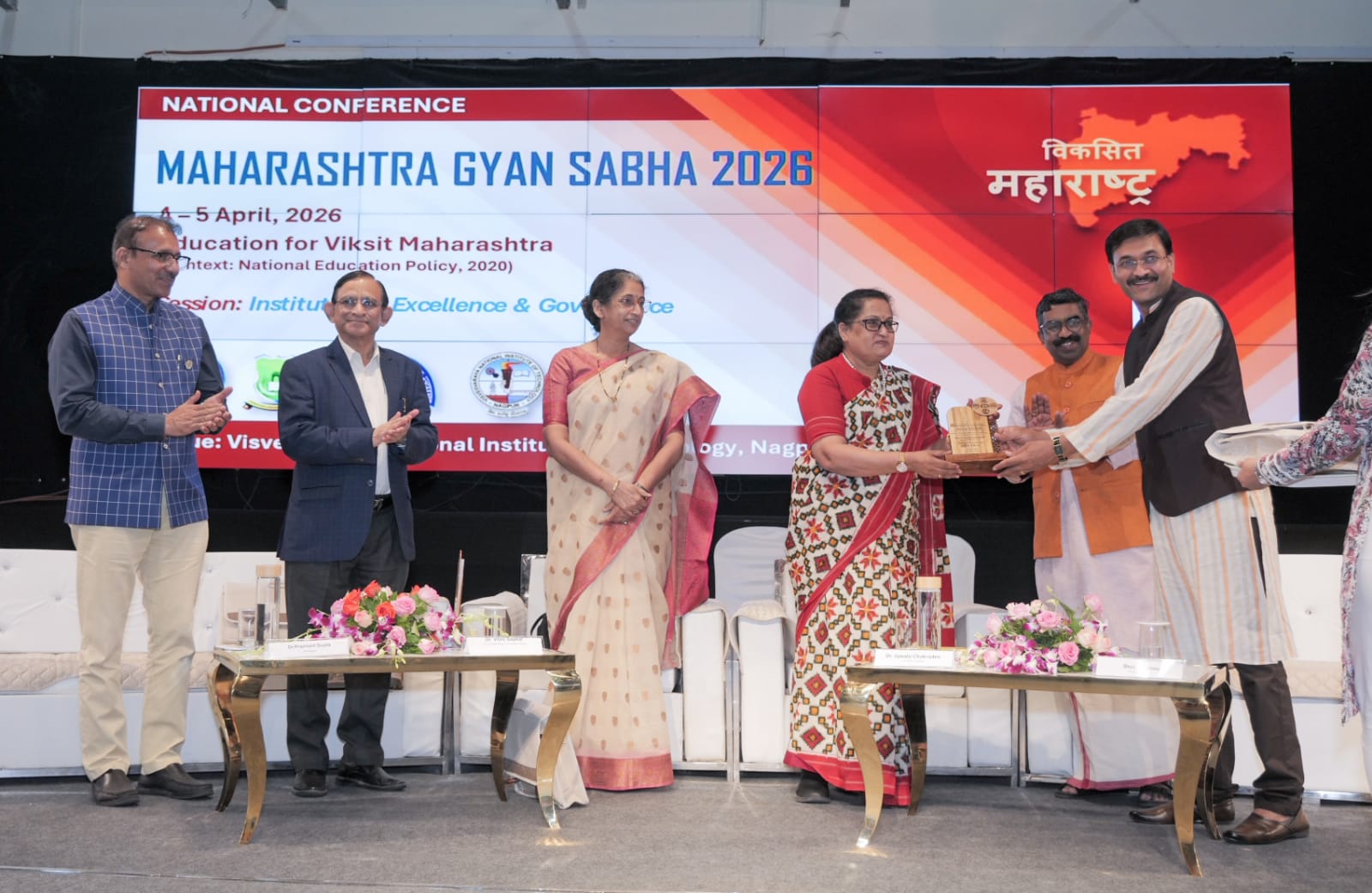
Qualitative Transformation in Education Key to ‘Developed India’: Insights from Maharashtra Gyan Sabha
Nagpur | April 04 2026
A significant discussion during the second session of the Maharashtra Gyan Sabha emphasized that qualitative transformation in education is essential to achieving the vision of a “Developed India.” The session was jointly organized by Rashtrasant Tukadoji Maharaj Nagpur University, Gondwana University, Visvesvaraya National Institute of Technology, Indian Institute of Management, and Shiksha Sanskriti Utthan Nyas.
The session featured an in-depth panel discussion on the theme: “Educational Transformation, Institutional Excellence, and Governance in the Context of the National Education Policy (NEP).”
The discussion was chaired by Dr. Shashikala Wanjari, Vice-Chancellor of National Institute of Educational Planning and Administration. Distinguished speakers included Dr. Ujwala Chakradev, Vice-Chancellor of SNDT Women’s University; Dr. Vilas Sapkal, former Vice-Chancellor of RTM Nagpur University; Dr. Prashant Joshi, Dr. Prashant Gupta, and A. Vinod. The session was moderated by Dr. Shamrao Koreti, Dean of the Faculty of Humanities, RTM Nagpur University.
Eminent speakers shared their perspectives on reforms in the education system, focusing on quality enhancement, value-based education, and effective governance. The discussion highlighted that institutional excellence combined with efficient governance is crucial for bringing qualitative changes in education and achieving the goal of a developed nation.
Dr. Ujwala Chakradev emphasized the importance of education rooted in Indian family values and the भावना of motherhood, advocating for compassion, empathy, and moral values to reduce societal disparities.
Dr. Vilas Sapkal referred to the concept of “light but tight regulation,” stressing the need for balanced governance, transparency, and accountability within educational institutions.
Dr. Prashant Joshi highlighted the importance of ethics, sensitivity, and natural justice in decision-making processes. The session also underscored the importance of inclusive governance, ensuring participation from all stakeholders and strengthening the foundation from school education to higher education. Special emphasis was placed on developing 21st-century skills among students.
In the context of medical education, it was noted that patients serve as the real teachers for students, and despite the challenges of managing large patient loads, it enables the delivery of both quality education and healthcare services.
Dr. Prashant Gupta identified education, training, and research as the three key pillars of institutional excellence. He emphasized the importance of society-oriented research, strong leadership, continuous improvement, and stakeholder engagement, along with a student-centric approach and integration of human values in education.
In her presidential address, Dr. Shashikala Wanjari presented a holistic vision of education, emphasizing the development of mind, body, intellect, and moral values. She reiterated that governance and excellence are complementary concepts, highlighting the importance of transparency, accountability, and the “light but tight” regulatory approach. She also stressed curriculum reforms, value-based education, stakeholder participation, and institutional development planning.
Reviewing the higher education landscape in Maharashtra, she expressed pride in the state’s growing academic progress and its efforts toward internationalization in education.